
 BRIEF DESCRIPTION
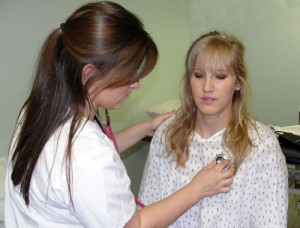
Registered nurses (RNs) are health care professionals who provide and coordinate patient care for people of all ages who have medical problems or other health-related conditions that limit their ability to perform everyday activities including: bathing, walking, eating, dressing, taking medications, managing chronic illnesses, recovering from surgery or injury, etc.
RNs assess each patient and create a specialized care plan using treatment methods that help people to recover from illness or injury, reduce pain, restore function, and prevent complications. In addition, RNs work with people to stop health problems before they happen by creating education and wellness-oriented programs for healthier and more active lifestyles.
HOW DO I BECOME A REGISTERED NURSE?
To become a professional registered nurse, you must obtain an associate degree (ADN) or bachelor’s degree (BSN) in nursing from an accredited program and pass the NCLEX-RN national licensing exam. A registered nurse must complete at least 2-4 years of college/professional education: two years for the ADN pathway or four years for the BSN pathway. In order to be accepted to a nursing program, you will need prerequisite courses in the fields of biological science, chemistry, anatomy and physiology, statistics, English composition, and psychology. A certain grade-point average (GPA) is usually required for the prerequisite courses. Nursing study is rigorous and admission to accredited nursing programs is extremely competitive.
WHAT WILL I LEARN IN NURSING SCHOOL?
Once accepted into a nursing school, the courses will consist of classwork in nursing fundamentals, anatomy and physiology, pharmacology, pathophysiology, health assessment, medical-surgical nursing, maternal-child health, pediatric nursing, psychiatric-mental health nursing, and community health. The program also provides extensive clinical experience and education in the direct care of patients in a health care facility. This includes how to perform an appropriate assessment and evaluation of patients of a variety of disorders, medication administration, treatment interventions, and patient education. Most programs include 2-4 years of classroom, laboratory, and clinical work. Nursing students get supervised experience in areas such as hospitals, clinics, and community settings.
LIFE AFTER GRADUATION
Licenses and Certifications
- After finishing education requirements, graduates must pass the NCLEX-RN national licensing examination and apply for RN licensure through the Louisiana State Board of Nursing. A criminal background check is required. Continuing education is typically required for registered nurses to keep their license.
- After gaining work experience, many registered nurses choose to become board-certified in a specialty area. Certification is available through organizations such as the American Nurses Credentialing Center (ANCC) or specialty boards in areas including critical care (CCRN), emergency nursing (CEN), oncology, pediatrics, and many others. Specialty certification requires passing an exam and documented clinical hours in the specialty area.
o Where do RNs Practice?
- Hospitals and inpatient facilities
- Outpatient clinics and physician offices
- Skilled nursing, extended care, or subacute facilities
- Home Health
- Education or research centers
- Schools and colleges
- Hospice
- Industrial, workplace, or other occupational environments
- Public health departments and community agencies
Most RNs work full time and most work during normal business hours. Some RNs may work evenings, nights, weekends, or holidays due to 24/7 patient care needs.
SALARY INFORMATION*
Mean annual wage for LA: $84,110
Mean annual wage by region:
Northwest
Shreveport/Bossier and surrounding area: $83,200
North Central
Monroe: $78,740
Central
Alexandria: $78,740
Southwest
Lake Charles and surrounding area: $73,050
South Central
Lafayette: $78,000
Baton Rouge: $78,200
Southeast
Houma/Thibodaux: $73,050
New Orleans/Metairie/Kenner: $81,920
Hammond: $76,920
Note: salary can change depending on the what area of nursing a person works in such as acute care, outpatient, specialty units, travelling, home health, etc.
LOUISIANA SCHOOLS
- Louisiana State University Health Science Center – New Orleans (nursing.lsuhsc.edu)
- Northwestern State University of Louisiana – Shreveport (www.nsula.edu)
Minimum Requirements to be Accepted
LSUHSC – New Orleans:
- Hold a high school diploma or equivalent and complete all prerequisite courses (Anatomy & Physiology I/II, Chemistry, Microbiology, Statistics, English, Psychology, etc.) with a grade of C or better
- Cumulative GPA of 3.0 or higher (science GPA 3.0 preferred)
- TEAS exam score of 65% or higher (or equivalent standardized test)
- Background check, drug screen, and current CPR certification
Northwestern State University – Shreveport:
- Hold a high school diploma or equivalent and complete prerequisite courses with a grade of C or better
- Undergraduate GPA of 2.5 overall or 2.75 in last 60 hours
- Completion of all pre-nursing courses (A&P, Chemistry, English, Math, Psychology)
- Current unencumbered Louisiana CNA certification or equivalent preferred for some tracks
PROFESSIONAL INFORMATION SOURCES
American Nurses Association (ANA)
8515 Georgia Avenue, Suite 400
Silver Spring, MD 20910
1-800-274-4ANA (4262)
nursingworld.org
Louisiana State Nurses Association (LSNA)
P.O. Box 13735
Baton Rouge, Louisiana 70893
225-201-0990
lsna.org
*Salary information taken from http://www.bls.gov/oes/current/oes_la.htm#29-1141